Beyond Kegels: What to Know About Pelvic Organ Prolapse | The Movement Solution
Beyond Kegels: What You Actually Need to Know About Pelvic Organ Prolapse
If you were recently told you have prolapse, you've probably already heard some version of this: rest more, stop exercising, and if it gets bad enough, you'll need surgery.
For most women, that advice creates more fear and confusion than answers. So let's clear a few things up.
Prolapse management isn't about endless Kegels or avoiding life. It's about understanding pressure, rebuilding strength and coordination, and creating a body that can actually support the goals you have — whether that's picking up your kids, running again, or just not thinking about your pelvic floor all day long.
What Is Prolapse, Really?
Prolapse is a change in how well your pelvic organs are supported. That does not mean your organs are truly "falling out," even if it feels that way. When the muscles, fascia, and connective tissue that support your pelvic organs are under more load than they can currently manage, symptoms show up.
The three most common types:
Cystocele — the bladder descending
Rectocele — the rectum pushing forward
Uterine prolapse — the uterus descending
Common symptoms include heaviness or a dragging sensation, pelvic pressure, a bulging feeling, incomplete bladder emptying, urgency or frequency, leakage, constipation, and low back or pelvic pressure.
Why Your Symptoms Come and Go
Here's something that surprises a lot of people: symptoms fluctuate based on activity level, fatigue, stress, bowel habits, hormones, breathing patterns, and how much you're lifting or carrying that day.
More symptoms on a given day does not automatically mean your prolapse is getting worse. It often just means one of these factors is currently stacked against you.
Why Symptoms Actually Happen
Some of the most common drivers behind prolapse symptoms:
Poor pressure management
Breath holding
Weakness or deconditioning (often from being told to "just rest")
Stress and tension patterns
And some of the risk factors that can increase the likelihood of prolapse in the first place: straining or bearing down in the bathroom, vaginal delivery (especially with higher birth weight), obesity, a sedentary lifestyle, and hysterectomy.
Let's Talk About Pressure Management
Managing pressure isn't about bearing down harder or bracing more — it's about distributing pressure evenly throughout your core. That takes coordinated breathing, core function, and pelvic floor strength and relaxation working together. When one part of that system isn't pulling its weight, another part compensates — and that's often where symptoms start.
Constipation plays a bigger role here than most people realize, too. Straining and pushing creates repeated downward pressure that can directly increase prolapse symptoms, which is why fixing bowel habits and mechanics is often a major piece of the puzzle.
4 Prolapse Myths That Need to Go Away
Myth 1: Kegels fix prolapse. Kegels aren't the answer for everyone. Some people need relaxation, breath retraining, and coordination — not more squeezing. Real functional strength comes from building the pelvic floor, glutes, hips, and core as a system, not from doing endless isolated reps.
Myth 2: Surgery is the only option. Surgery can absolutely be appropriate — but it's not the only path forward. Many women see significant improvement through pressure management, strength training, and individualized rehab. Surgery can fix a structure, but it doesn't address how you move or how strong you are. The right approach is trying quality rehab first, not skipping straight to the operating room.
Myth 3: Exercise is dangerous. Avoiding movement altogether usually leads to more deconditioning, not less risk. The problem isn't exercise — it's poorly dosed or poorly coordinated movement. What you need is a plan that progresses you systematically from where you are to where you want to be.
Myth 4: Postpartum symptoms are just your "new normal." Common does not mean permanent. Just because a lot of women deal with this after having a baby doesn't mean you have to just live with it forever.
Your Symptom Relief Starter Kit
A few simple strategies to start reducing symptoms right away:
Use gravity to your advantage:
Legs elevated
Waterfall position (legs up the wall)
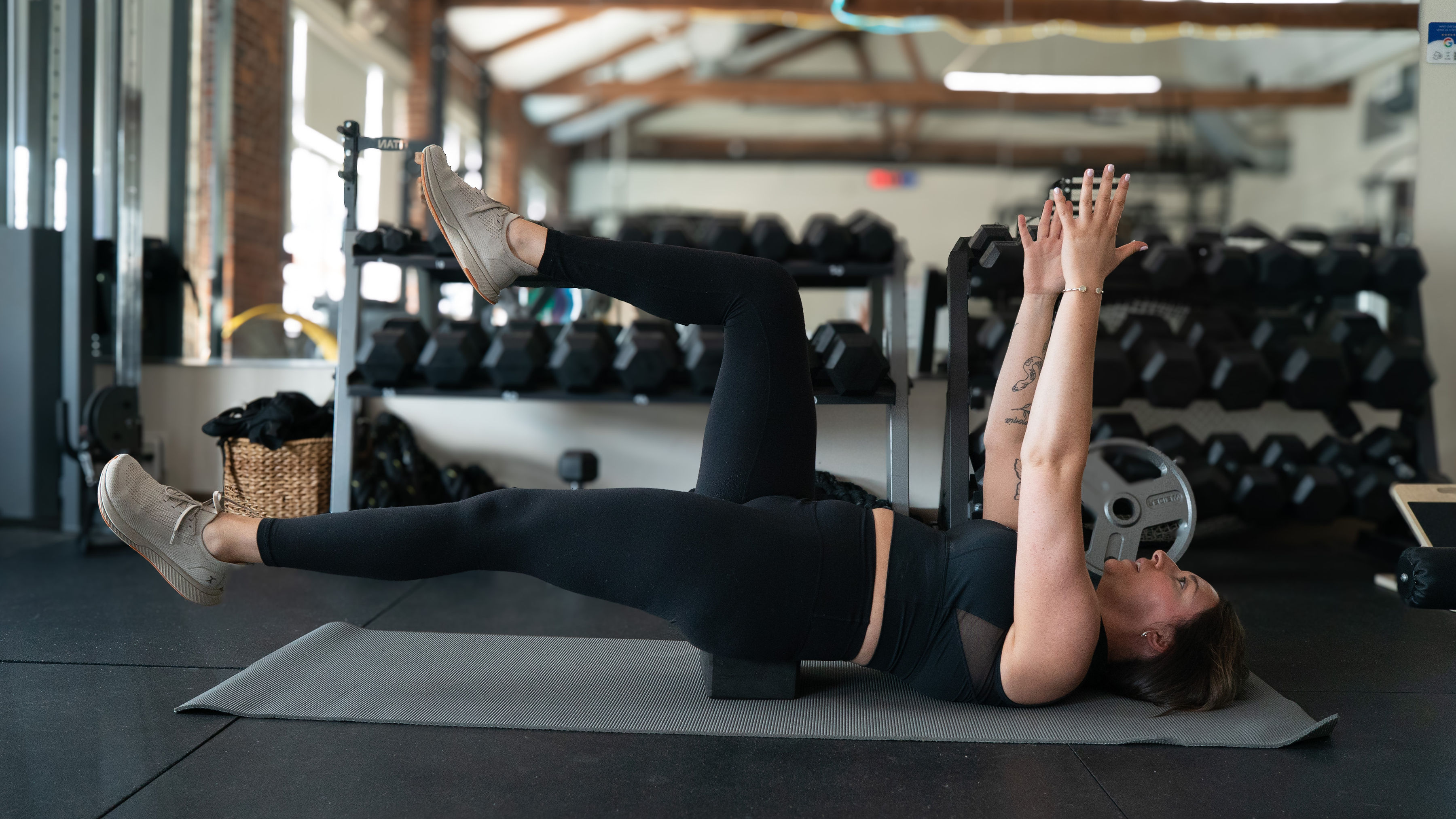
Block under the tailbone / hips elevated
Puppy pose
Reduce pressure during daily life:
Exhale on exertion
Avoid unnecessary breath holding
Coordinate your breathing with lifting and movement
Support better bowel habits:
Use a stool under your feet while on the toilet
Breathe through bowel movements instead of pushing
Stay well hydrated
Aim for 25–30g of fiber per day
Keep moving regularly
Try gentle belly massage
A Few Beginner Exercises to Start With
These are basic starting points to improve breathing mechanics, pelvic floor relaxation, and deep core coordination — not a full program:
360 Breathing
Block-supported bridge with breathing
Puppy pose
Waterfall position
Tabletop breathing with deep core coordination
Quality matters far more than quantity here — form over reps, every time. For breathing work, start with just one minute at a time and build gradually from there.
This Is Just the Starting Point
These beginner exercises are exactly that — a starting point. Real, lasting results come from a program that progresses over time to match the actual demands of your life: lifting, running, impact, fitness goals, whatever "getting back to normal" looks like for you. That progression should be built around your body, your symptoms, and your goals specifically — not a generic list.
If you're ready for a personalized plan, I'd love to help you build one. Apply for 1:1 coaching and let's create a custom plan designed to reduce your symptoms and get you back to moving confidently.
Also dealing with urgency, frequency, or bladder leaks? Grab the free Stop Running to the Bathroom guide too.
This post is for educational purposes only and does not constitute medical advice. Always consult your doctor before beginning a new exercise program.